How to Teach Your Child Hangul at Home (5 Minutes a Day)
Good news first: Hangul, the Korean alphabet, is one of the easiest writing systems in the world to learn. It was created in the 1400s under King Sejong the Great so that everyone could read and write, not just scholars. That makes it perfect for kids.
You don't need to be fluent to help your child. You only need a little routine, a few minutes a day, and a playful attitude.
- How Hangul works (in 60 seconds)
- A simple 4-week plan
- The 5-minute daily routine
- Tips for non-Korean-speaking parents
How Hangul works (in 60 seconds)
Hangul has 14 basic consonants and 10 basic vowels. Letters are grouped into square “blocks,” and each block is one syllable.
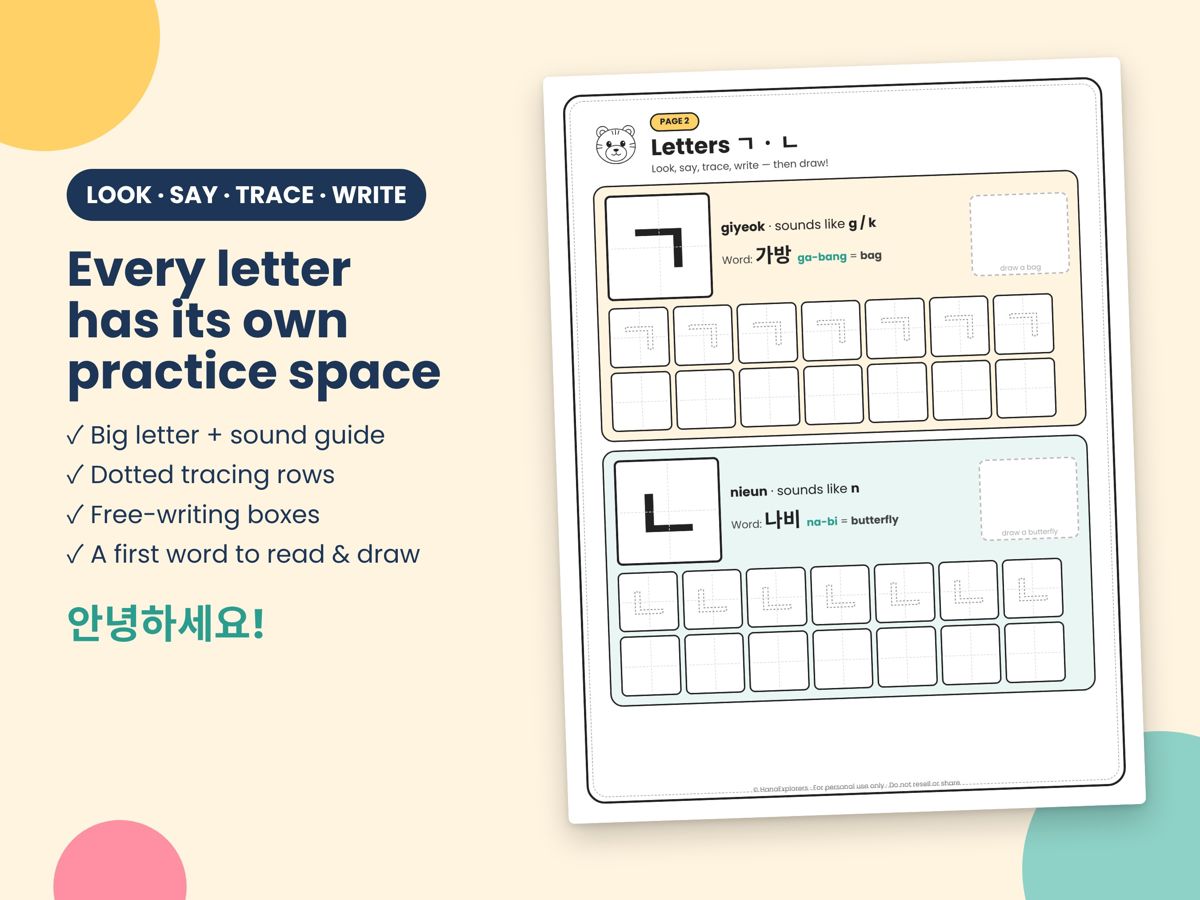
ㄱ (g) + ㅏ (a) = 가 (ga)
ㄴ (n) + ㅏ (a) = 나 (na)
So 나비 = na-bi = butterfly 🦋
Once kids understand that blocks are “letters stacked together,” reading suddenly clicks. Many children can sound out simple words within a few weeks.
A simple 4-week plan
Week 1: Five vowels
Start with ㅏ ㅓ ㅗ ㅜ ㅣ (a, eo, o, u, i). Vowels are simple lines and dots, so they're easy to trace. Say each sound out loud and make it silly: “ㅗ is oh! like a surprise.”
Week 2: Five consonants
Add ㄱ ㄴ ㄷ ㅁ ㅂ (g, n, d, m, b). Now you can build real blocks like 가, 나, 다, 마, 바.
Week 3: First words
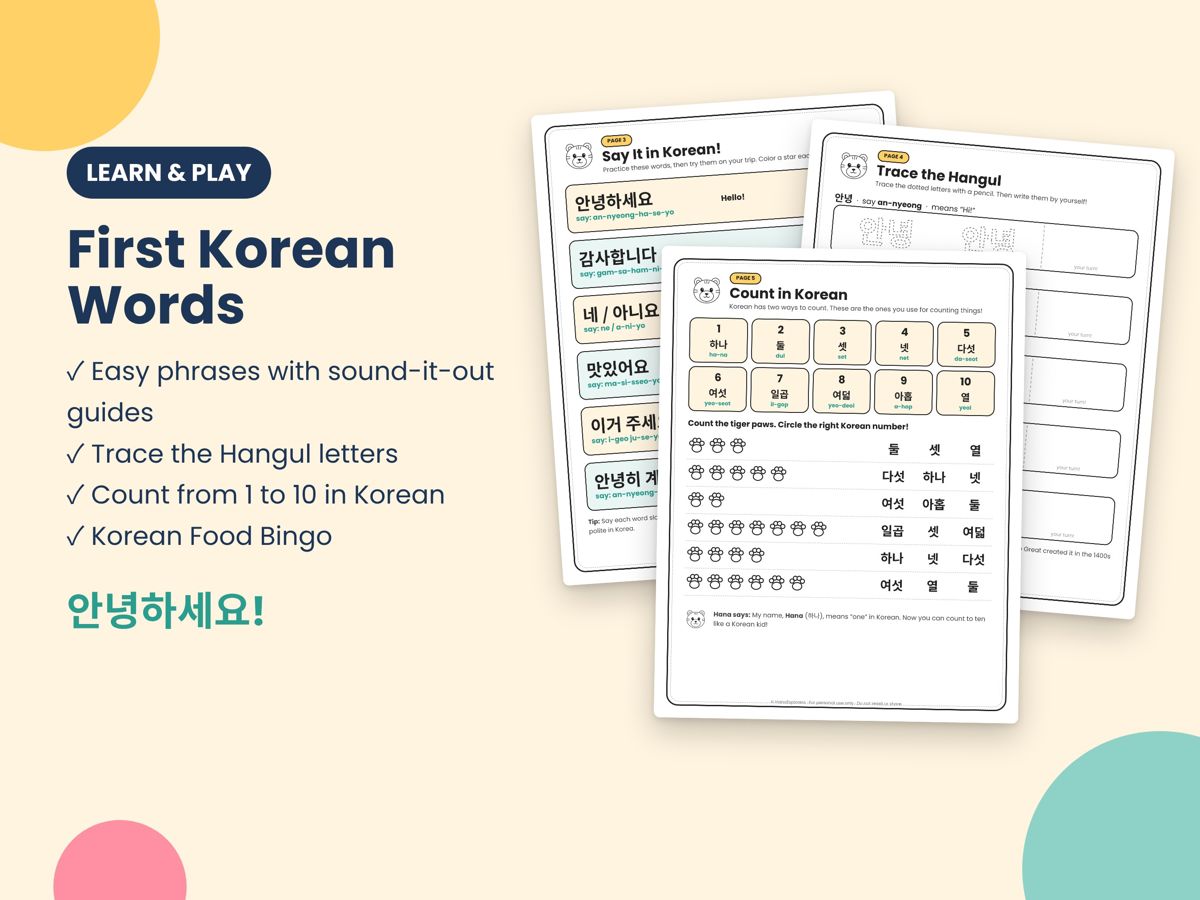
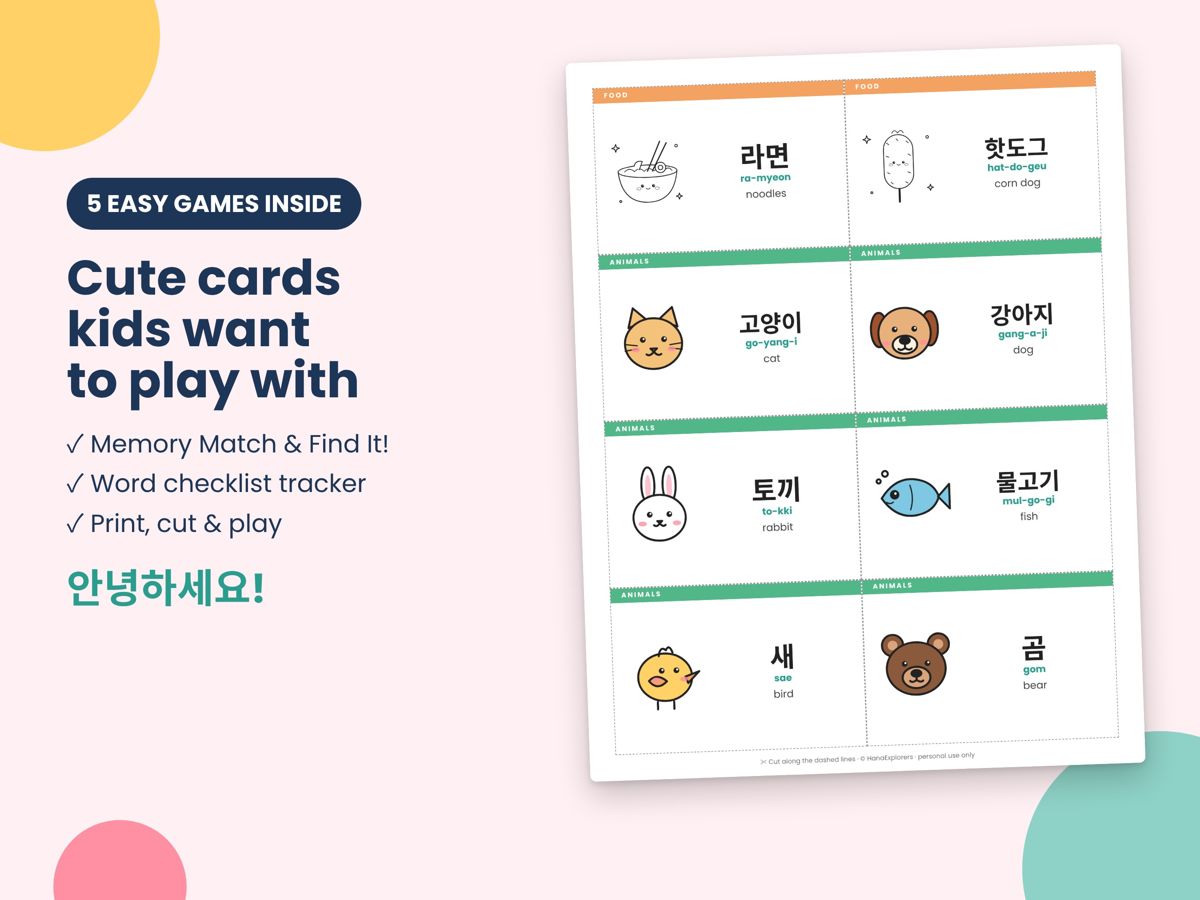
Read short words made only from letters you know: 나비 (butterfly), 바나나 (banana), 나무 (tree), 바다 (sea), 두부 (tofu). Kids love discovering that “바나나” really says banana!
Week 4: The rest of the letters
Add two or three new letters every few days. Keep reviewing old ones with quick games instead of drills.
The 5-minute daily routine
- Look & say (1 min): Show one letter and say its sound together.
- Trace (2 min): Trace the dotted letter a few times. Big, slow strokes.
- Write (1 min): Write it alone in an empty box. Praise the effort, not the neatness.
- Play (1 min): Hide the letter card somewhere in the room and let your child find it.
Tips for non-Korean-speaking parents
- Use sound guides, then real voices. English spellings get you close, but listening to a native speaker (a video or an app) fine-tunes the sounds.
- Learn together. Kids love it when they can “teach” you. Let them quiz you.
- Connect to things they love. K-pop song titles, Korean food at the grocery store, a cousin's name: real-life Hangul is everywhere once you start looking.
- Don't worry about grammar. At this age, reading and a handful of words is a big win.
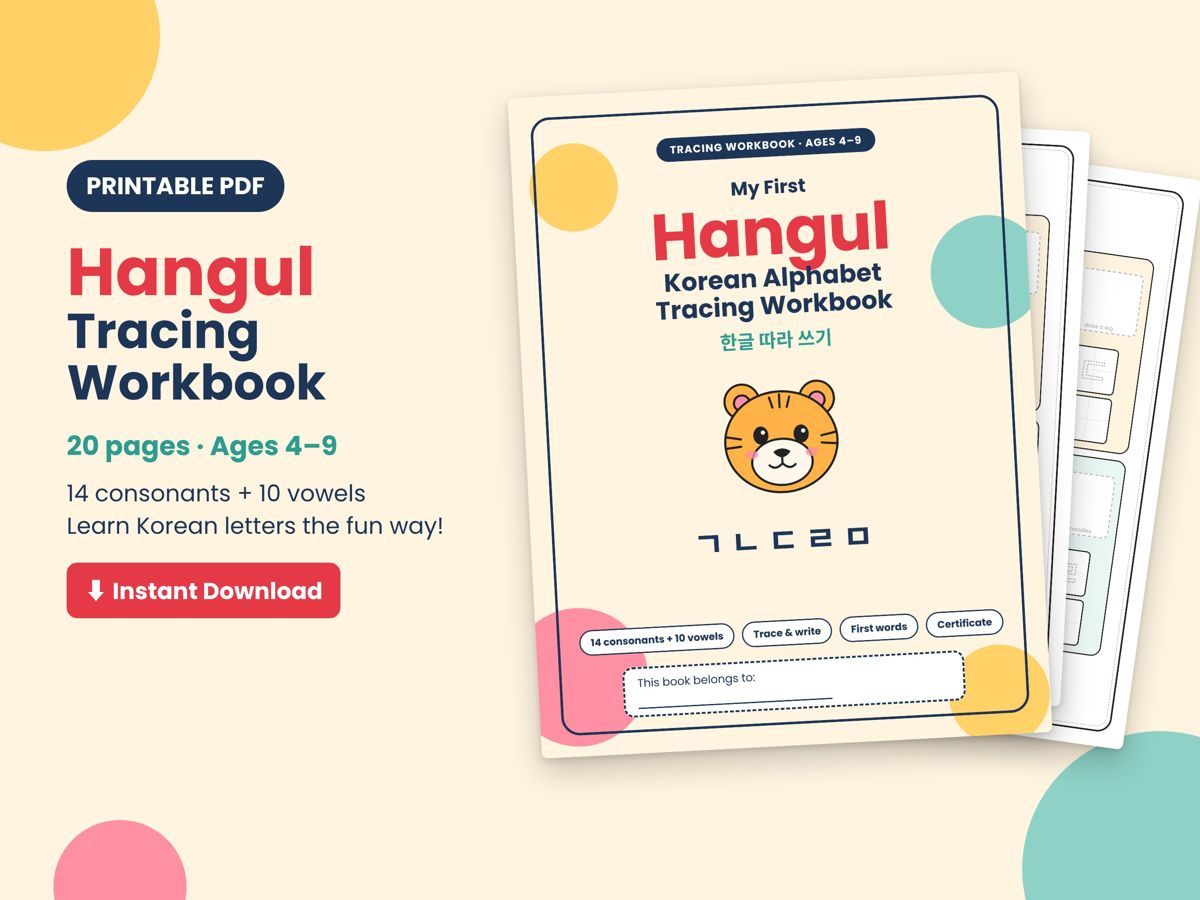
Hangul Tracing Workbook
Every Korean letter gets its own practice space: a big letter, dotted tracing rows, free-writing boxes and a first word to read and draw. Ages 4–9.
See it on Etsy →